
Your bank balance says one thing, and your books say another. That’s a common problem for owners who run on memory and spreadsheets. The best accounting tips for small business owners are simple: keep money separate, reconcile every month, and know which taxes you owe.
These seven tips are written for owners in Bloomsburg and Columbia County. Pennsylvania adds local taxes that many national guides skip. Whether you run a shop in town or a one-person service business, the same basics apply. You’ll see what each habit looks like in practice, which local taxes to check, and when it makes sense to hand the work to a professional. A yearly checklist at the end pulls it all together.
1. Why should you keep business and personal money separate?

Mixed money makes your records unreliable. A separate business bank account and card show exactly what the business earns and spends. They also speed up tax time, because you won’t have to sort personal purchases from business ones. It’s the cheapest accounting fix there is.
Open a business checking account first. Add a business credit card if you use one. Then pay every business cost from those accounts only. Say you buy printer paper on your personal debit card. Three months later, nobody remembers if it was for the shop or for home. Multiply that by fifty receipts, and your books turn into guesswork.
Pay yourself with a clear transfer from the business account, and label it as an owner draw or distribution. Don’t just grab cash when you need it. How you record it depends on your business structure, so ask your accountant.
2. How often should you do bookkeeping and reconcile your accounts?
Record transactions weekly and reconcile every account monthly. Bookkeeping means recording income and expenses. Reconciling means matching those records to your bank and credit card statements. Weekly entries stop piles from building up. Monthly matching catches errors while you can still trace them.
Here’s a simple rhythm:
- Weekly: log sales, sort expenses into categories, and send invoices.
- Monthly: reconcile every bank and card account, then review unpaid invoices and bills.
Track money owed to you (accounts receivable) and money you owe (accounts payable) separately. A late invoice is cash you can’t use. And a missed bill can mean late fees.
Pick one bookkeeping system and stick with it. Cloud accounting software that connects to your bank saves typing. But software only records what you tell it, so someone still needs to check the categories. Save receipts as you go, too. A phone photo filed by month beats a shoebox every time.
These bookkeeping tips for small business owners sound basic. Skipping them is still where most messy books begin. If you’re weighing whether to outsource, our breakdown of what bookkeeping costs for small businesses can help you decide.
3. Which local taxes should a Bloomsburg business owner know about?

Four local taxes may apply: earned income tax, Local Services Tax, business privilege or gross receipts tax, and property tax. Which ones touch you depends on whether you have employees, how you earn income, and whether you own property. The Town of Bloomsburg lists Berkheimer as its collector for the first three.
Rates change, so we’re not listing them here.
Local earned income tax
If you have employees, you usually withhold local earned income tax from their pay and send it in. The rate can depend on where each employee lives and works. So don’t assume one rate fits everyone. If you’re self-employed, local earned income tax may apply to your net profits too, often paid in installments.
Local Services Tax
Local Services Tax (LST) is a flat yearly tax on people who work in a municipality. Pennsylvania caps it at $52 per person per year, and employers usually withhold it from paychecks.
A worker who expects to earn under $12,000 from all sources in the municipality that year can file an exemption certificate. A Bloomsburg employer typically needs that certificate on file before skipping withholding. It isn’t automatic for everyone under that amount. And if the worker’s pay passes $12,000, withholding generally starts.
Business privilege and gross receipts tax
Businesses in Bloomsburg may need to register for a business privilege or gross receipts tax, which Berkheimer collects for the Town. This one is a tax on the business, not on employees. It’s typically based on gross receipts and carries its own registration. Whether it applies to you depends on your business, so check before assuming you’re exempt. Clean sales records make the filing much easier.
Property tax
If you own taxable property, you’ll get bills from the county, the town, and the school district. Assessment questions go to the Columbia County Assessment Office. Renting your space? Your landlord usually receives those bills, so check how your lease handles them.
4. How do you get payroll and tax deadlines right?
Keep clean payroll records, withhold the right amounts, and put every filing date on one calendar. Payroll mistakes get expensive fast. A wrong withholding or a late deposit can lead to penalties and unhappy employees. So treat payroll as a system, not a monthly scramble.
For every employee, keep a signed W-4, pay records, and pay stubs. Withhold federal taxes, Pennsylvania state tax, and the local taxes above. Then pay and file on time.
Your payroll and your books should also match. When payroll runs in a separate system, entries can drift away from your accounting records. A quick monthly check fixes that.
Are you a sole proprietor or partner? You’ll likely pay estimated taxes instead. The IRS generally expects four payments a year, around mid-April, mid-June, mid-September, and mid-January. Pennsylvania has its own estimated payment rules too. Our guide to quarterly estimated tax payments for Pennsylvania businesses walks through the details.
Keep tax documents in one folder. Then set a calendar reminder two weeks before each deadline.
5. How do you build a budget and keep cash flow steady?
Build a simple monthly budget, then compare it to your real numbers every month. Cash flow is the timing of money coming in and going out. A business can look profitable on paper and still run short on cash if customers pay late.
Start with last year’s numbers if you have them. List fixed costs like rent and insurance. Then add costs that move with sales.
Each month, check three things: cash in, cash out, and what’s due next month. Look ahead 60 to 90 days if you can. Do you know what you’ll owe next month? High costs shouldn’t come as a surprise. Build a cash reserve, too. Many advisors suggest at least one month of operating costs. Picture a slow season hitting. A reserve lets you cover rent and payroll without borrowing. Even a small cushion helps.
6. How do you read your financial statements?
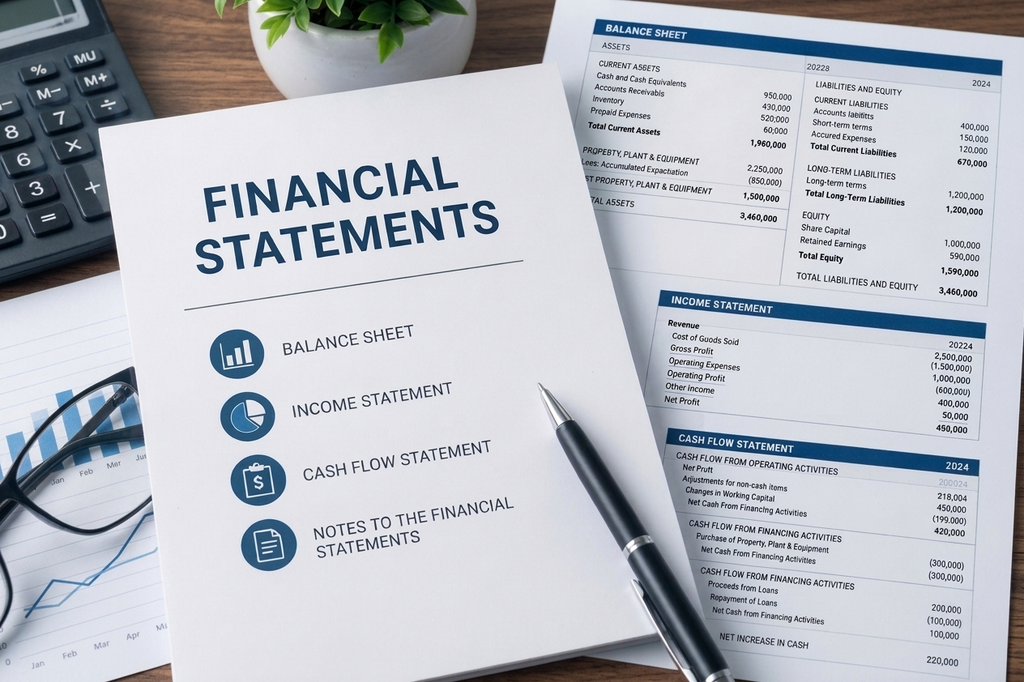
Start with two reports: the profit and loss statement and the balance sheet. The profit and loss statement shows income minus expenses over a period. The balance sheet shows what you own and owe on one date. Together they show how the business is really doing.
Read the profit and loss first. Are sales growing? Is any expense jumping? Compare this month to last month and to the same month last year. Then check the balance sheet. Look at cash, unpaid customer invoices, unpaid bills, and loans. If unpaid invoices keep climbing, you’re collecting slower than you’re selling.
Financial statements for small businesses only help when the books are current. That’s why tips 1 and 2 come first.
7. When should you hire an accountant or a fractional CFO?
Hire help when your books fall behind, payroll or taxes feel risky, or you’re making bigger decisions without clear numbers. A bookkeeper keeps records. An accountant reviews them and handles taxes. A controller manages reporting and internal processes. A fractional CFO guides planning.
Here’s who fits what:
- Bookkeeper: best for day-to-day records and monthly reconciliation.
- Accountant: best for tax preparation and year-end reporting.
- Part-time controller: best when your books need structure and dependable reports.
- Fractional CFO: best for budgets, cash flow forecasts, and decisions about hiring, borrowing, or investing.
Watch for these signs. You haven’t reconciled in months. You dread tax season. You’re unsure about local filings. Or you’re planning to hire or borrow. Waiting until tax season, ignoring unpaid invoices, and mixing personal spending back in are the mistakes that cost owners the most.
A small business accountant in Bloomsburg, PA should explain things in plain English and know the local filings. At Integrated Accounting and Consulting Services, we serve small businesses in Bloomsburg and across Central Pennsylvania. We handle bookkeeping, payroll, part-time controller work, fractional CFO support, and tax preparation. Our team has more than 25 years of combined experience, and everything runs online through a secure portal.
A yearly checklist of accounting tips for small business owners
Use this checklist to keep up with the basics all year. It turns the seven tips above into a routine. Adjust it to your own filing dates and business type.
| When | What to do |
| Weekly | Record sales and expenses, send invoices, check your cash balance |
| Monthly | Reconcile bank and card accounts, review your profit and loss, check unpaid invoices and bills, look at next month’s cash needs |
| Quarterly | Pay estimated taxes if they apply, review payroll and local tax filings, compare your budget to actual results |
| Yearly | Gather tax documents, review local registrations and exemption certificates, meet your accountant to plan the next year |
Build a steadier financial routine for your Bloomsburg business
Good accounting isn’t about fancy software. It’s about steady habits. Keep money separate, record often, reconcile monthly, know your local taxes, and read your reports. These accounting tips for small business owners work in any season.
Integrated Accounting and Consulting Services works with owners in Bloomsburg and across Central Pennsylvania. We handle bookkeeping, payroll, tax preparation, and fractional CFO support online. If you’d like a steady team looking after your books, take a look at our accounting services in Bloomsburg, PA, or book a free appointment to talk through your situation with the team.
Email: info@integratedacs.com
Phone: Laura 610-554-7552 | Dan 215-527-4964 | Brandon 570-484-1947
FAQs
1. What are the best accounting tips for small business owners?
Keep business and personal money separate, record transactions weekly, and reconcile accounts monthly. Then budget, watch cash flow, and know your payroll and local tax duties. Review your financial statements each month. Bring in a professional when the books fall behind.
2. Do I have to pay local taxes in Bloomsburg, PA?
It depends on your business. Employers usually withhold local earned income tax and Local Services Tax. Some businesses also register for business privilege or gross receipts tax, and property owners get tax bills. Confirm current rules with Berkheimer or the Town of Bloomsburg.
3. How often should I reconcile my business bank account?
At least once a month, when your statement arrives. Busy businesses with many transactions may reconcile weekly. Matching your books to the bank catches duplicates, missing entries, and errors early, while they’re still easy to trace.
4. Can I do my own bookkeeping, or do I need an accountant?
You can handle bookkeeping yourself if the business is small and you stay consistent. Consider help when records fall behind, payroll gets complicated, or taxes feel unclear. An accountant also reviews your numbers, which a DIY system often skips.
5. What’s the difference between a bookkeeper, a controller, and a fractional CFO?
A bookkeeper records and reconciles transactions. A controller adds structure, reviews records, and keeps reporting accurate. A fractional CFO uses your numbers for budgets, cash flow forecasts, and growth decisions. Many growing businesses use one or more of them part-time.
6. Do I need an accountant who’s in Bloomsburg?
Not necessarily. Many firms work online through a secure portal and phone or video calls. What matters more is local knowledge: Bloomsburg’s local taxes, Pennsylvania rules, and a team that answers when you call.